
I watched a board spend six months trying to fill two open seats.
Six months.
Just… two chairs at a table.
They had two names. That was the list.
Not a shortlist.
Not a pipeline.
A list. Of two.
One declined after doing a little homework.
(The polite version of “this doesn’t feel right.”)
The other lasted a few weeks…
before it “wasn’t the right fit.”
You can imagine how that conversation went.
So the board did what many boards do next:
Lowered expectations…
and started over.
Fishing in the same overfished pond.
I’ve seen this pattern repeatedly.
And every time, it gets called a recruiting problem.
It isn’t.
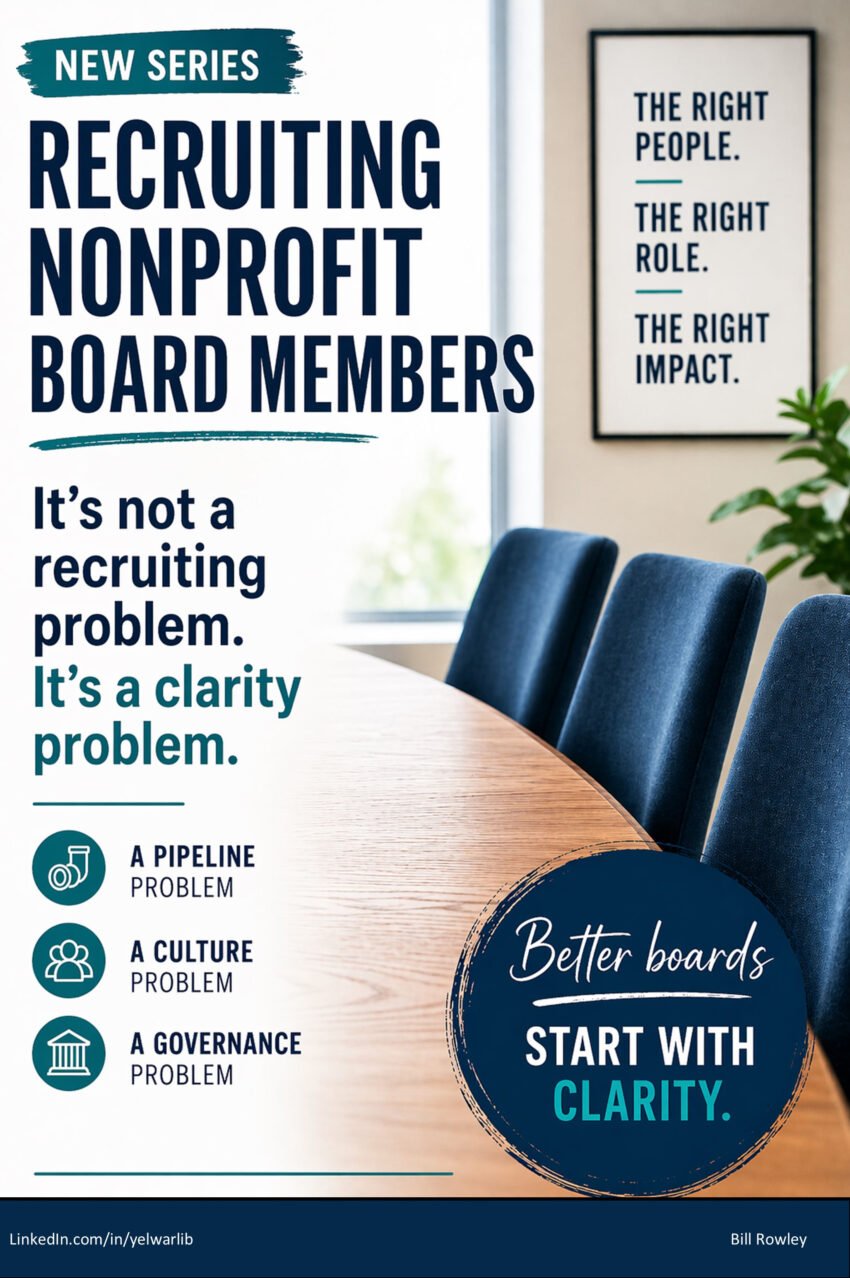
It’s a pipeline problem.
A culture problem.
A governance problem.
Because here’s what was really happening:
The board decided they needed “professionals.”
HR. Finance. Legal. Marketing.
Big donors.
People who would “keep things on track.”
What they got instead:
People with limited leadership experience…
suddenly wanting to manage staff.
People who equated activity with leadership.
Who stepped into roles that weren’t theirs—
…and stepped away from the ones that were.
What they missed:
The people who already loved the mission.
The ones showing up early. Staying late.
Volunteering weekends.
They were right there.
They just didn’t look like “board members.”
Here’s the part that sticks with me:
The best candidates didn’t have to be rejected.
They walked away on their own.
Not because the mission wasn’t compelling.
Because something felt… off.
Most nonprofits don’t have a recruiting problem.
They have a clarity problem.
What is the board actually there to do?
Because when that isn’t clear…
You don’t just struggle to fill seats.
You quietly push away the people
who would have made the board better.
Over the next few weeks, I’ll share what I’ve learned about recruiting board members and what makes people want to join and stay.
💬 Have you ever said yes to something… and later realized you didn’t fully know what you were stepping into?
#NonprofitLeadership #BoardGovernance #NonprofitBoards #Leadership