
Chris was one of the organization’s best volunteers.
Reliable.
Passionate.
Always willing to help.
When a board seat opened, his name came up almost immediately.
Everyone agreed:
“Chris would be great.”
So, they invited him to coffee.
They talked about the mission.
The future.
The impact he could make.
Chris was excited.
He saw board service as an opportunity to help the organization improve and make positive changes.
A few weeks later, he joined the board.
And that’s when the problems started.
Not because Chris was a bad person.
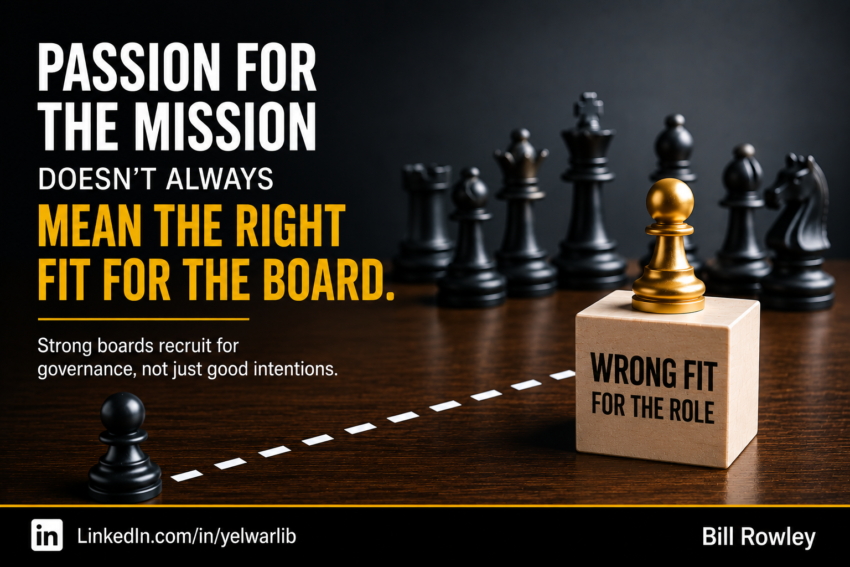
Because he was the wrong fit for the role.
Chris had never managed an organization or led staff.
He had lots of energy, strong opinions, and big ideas—but little understanding of how those ideas would actually be implemented.
As a volunteer, that had never been a problem.
As a board member, it became one quickly.
He pushed hard for changes without understanding operational realities.
He challenged staff directly.
He inserted himself into volunteer management.
He began directing employees and influencing day-to-day decisions.
In his mind, he was helping.
But he couldn’t separate his role as a passionate volunteer from his responsibility as a governing board member.
And even worse…
No one had helped him understand the difference.
The board assumed enthusiasm would translate into governance leadership.
It didn’t.
Tension grew.
Staff became frustrated.
Board dynamics became strained.
And eventually, difficult conversations followed.
Here’s the hard truth:
Most boards don’t recruit board members.
They recruit good people and hope the rest works out.
But governance is a specific role.
Being passionate about the mission does not automatically mean someone is prepared to govern an organization.
Strong boards understand this.
They don’t just evaluate enthusiasm, generosity, or professional success.
They evaluate:
• Role fit
• Governance mindset
• Ability to stay at the oversight level
• Emotional maturity during disagreement
• Understanding of boundaries and accountability
Because the goal isn’t simply finding people who care.
It’s finding people who can govern well.
If your board recruitment process mostly consists of conversations and good feelings…
You may not be evaluating board readiness.
You may just be making hopeful assumptions.