
Kim was one of the nonprofit’s largest donors.
She loved the mission.
She regularly shared the organization’s work on social media.
She gave generously every year.
And whenever fundraising campaigns launched, she was among the first to contribute.
When a board seat opened, her name quickly rose to the top of the list.
The board’s thinking was simple:
“She cares about the mission.”
“She’s financially invested.”
“She’ll be a great board member.”
Kim accepted the invitation.
And for a while, everyone felt good about the decision.
Then board meetings started.
Kim rarely contributed to discussions.
She avoided difficult conversations.
She had little interest in governance issues.
Strategic planning wasn’t her strength.
Financial oversight wasn’t her passion.
What she loved was supporting the cause.
What she didn’t love was governing the organization.
The problem wasn’t Kim.
The problem was the assumption.
The board recruited a donor when they actually needed a leader.
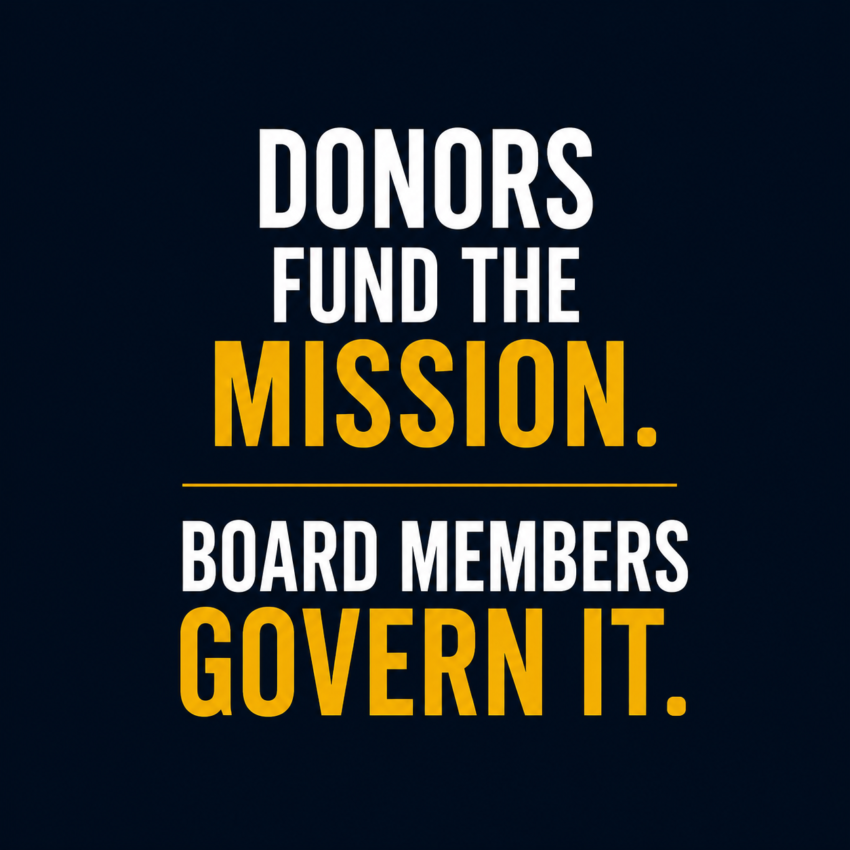
Giving and governing are not the same thing.
A generous donor can still be:
• Disengaged in meetings
• Uncomfortable with hard decisions
• Unclear on governance versus operations
• Focused on the mission but not organizational leadership
• Absent when difficult board work is required
Because financial support ≠ board leadership.
When boards prioritize giving capacity first, they often get:
• Quiet members who rarely engage
• Influence without accountability
• Deference instead of healthy discussion
And over time…
The board gets weaker, not stronger.
Strong boards flip the order.
They recruit leaders first.
People who:
• Think strategically
• Engage in difficult conversations
• Take ownership of governance responsibilities
• Understand oversight and accountability
And yes…
They also support financially.
But that’s not why they’re there.
Because a strong board member who gives is very different from a donor who sits on the board.
If your board conversations are unusually quiet…
It may not be a personality problem.
It may be a recruiting priority problem.