
I’ve worked with stagnant nonprofits that couldn’t understand why they weren’t keeping up with change—or making the impact they once did.
Then I looked at how they recruited their boards.
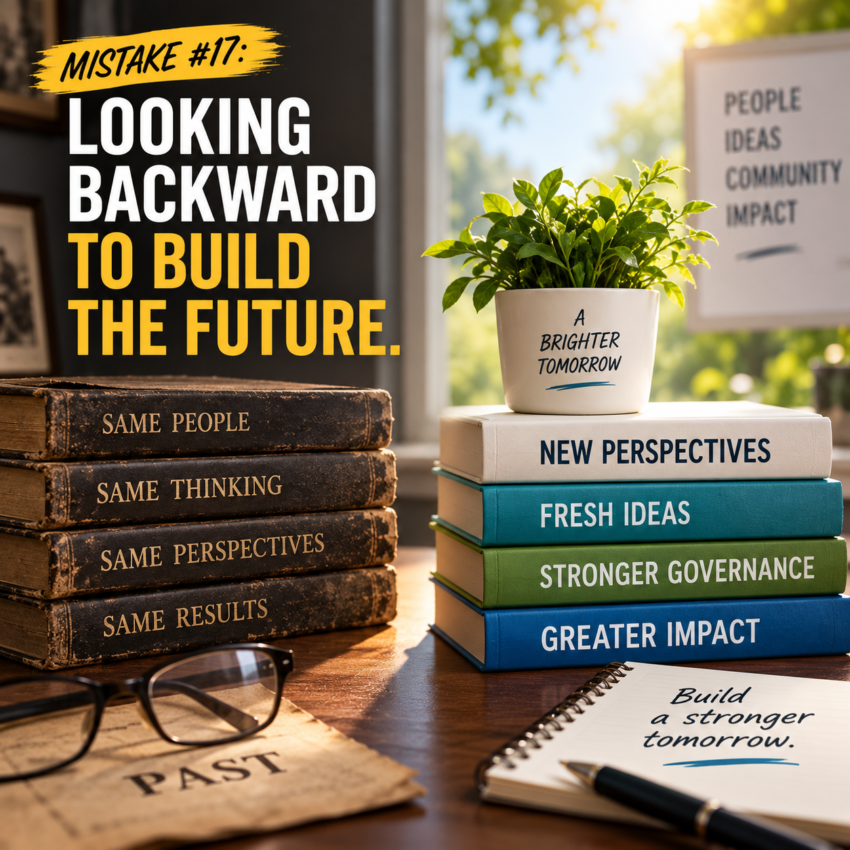
They were trying to build the future with people from the past.
When a board seat opened, they didn’t have a list of prospective candidates.
They didn’t have relationships being developed.
They didn’t have future board members in the pipeline.
They had a list of former board members.
“Who can we bring back?”
It feels like a safe solution.
They already know the organization.
They understand how things work.
They can step in quickly.
They won’t need much onboarding.
And sometimes, bringing back a former board member is exactly the right decision.
But when it becomes the default recruiting strategy, it’s usually a signal of something else:
• There’s no active recruiting pipeline
• New relationships haven’t been developed
• No one is being prepared for future service
• Succession planning isn’t happening
So the board keeps looking backward to fill seats…
And eventually, it starts thinking backward too.
The same people.
The same perspectives.
The same relationships.
The same assumptions about how things should be done.
Meanwhile, the organization and the community it serves continue to change.
Former board members can bring tremendous value.
Experience matters.
Institutional knowledge matters.
History matters.
But history shouldn’t become the recruiting pipeline.
Strong boards plan for turnover before the vacancy occurs.
They continually identify potential members.
They develop relationships.
They prepare people to step in.
They create options.
So when a seat opens, they’re not scrambling to ask:
“Who can we bring back?”
They’re asking:
“Who is ready to help take us forward?”
If your board keeps turning to the past to build the future…
You may not have a former board member problem.
You may have a succession problem.